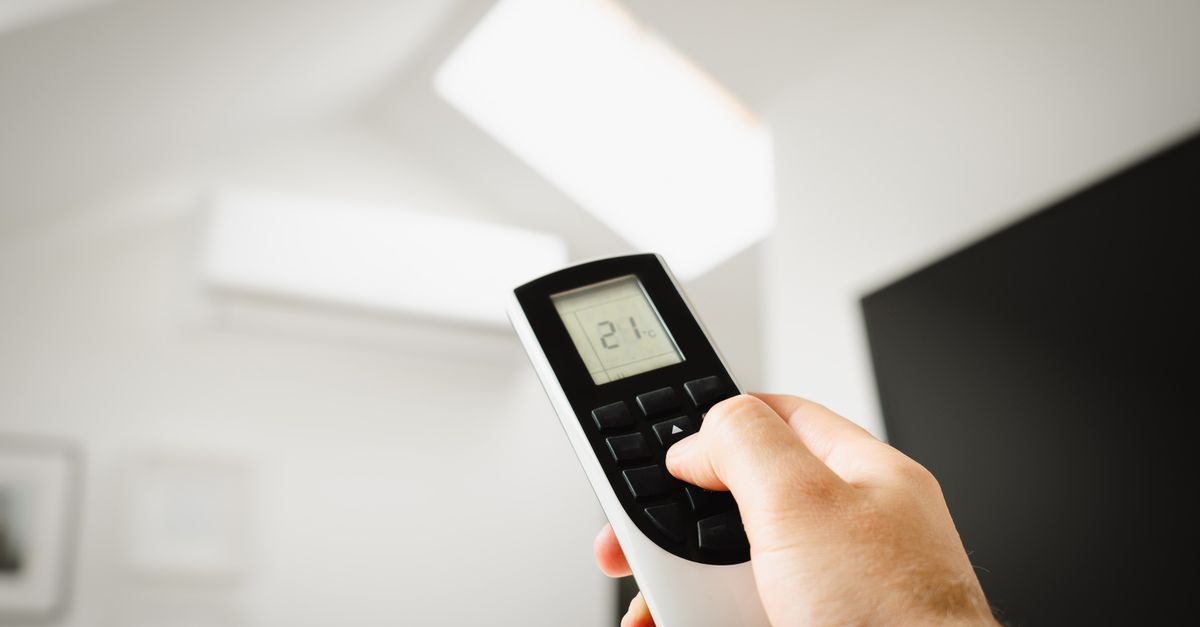
The 20-Degree Rule for Home Heating and Cooling: Why Most Advice Misses the Mark
Living in a climate that swings from humid summer highs to biting winter lows, I’ve spent years trying to crack the code on optimal home temperature. Like many, I started with the commonly recited ‘20-degree rule’: set your thermostat to 20°C (68°F) in winter and 26°C (78°F) in summer to save energy. It sounds sensible, a neat, tidy number that promises both comfort and cost savings. The problem? In my experience, and for many I’ve spoken to, it’s a rule that often misses the mark, leading to either discomfort, wasted energy, or both. It’s a generic guideline applied to a profoundly personal and unique environment – your home. What changed everything for me was realizing that true energy efficiency and comfort don’t come from rigid numbers, but from a deeper understanding of your home’s thermal dynamics and your family’s actual needs.
Key Takeaways
- The static ‘20-degree rule’ often fails because it doesn’t account for individual home insulation, window efficiency, or personal comfort thresholds.
- Optimize heating by understanding your home’s thermal envelope and using targeted setbacks during unoccupied hours, rather than a fixed low temperature.
- Maximize cooling efficiency by focusing on humidity control and leveraging natural ventilation strategies before relying solely on air conditioning.
- Implement smart thermostat scheduling based on occupancy patterns and integrate passive climate control methods for significant energy savings and improved comfort.
The Flawed Logic of a Fixed Temperature Guideline
The 20-degree rule, or any fixed temperature recommendation, operates on a fundamentally flawed premise: that all homes and inhabitants are identical. This couldn’t be further from the truth. Consider two homes, side by side, in the same climate. One is a newly constructed, well-insulated house with modern, double-paned windows and an efficient HVAC system. The other is a charming older home, perhaps with less insulation, single-paned windows, and an aging furnace. Asking both homes to maintain an internal temperature of 20°C in winter will yield vastly different results in energy consumption and comfort levels. The older home will leak heat like a sieve, forcing its heating system to work overtime, while the newer home retains heat with minimal effort. The 20-degree rule doesn’t differentiate; it treats them as equals. This oversight means that for many, adherence to the rule can lead to significant overspending on energy in less efficient homes, or unnecessary discomfort in homes that could easily maintain a slightly warmer or cooler temperature with minimal energy penalty. It fails to consider the crucial aspect of radiant heat versus ambient air temperature, too. A room at 18°C with warm walls and floors can feel more comfortable than one at 20°C with cold, drafty surfaces. The human body perceives warmth not just from the air, but from the surrounding surfaces.
In my own home, a mid-century build with some quirks, simply setting the thermostat to 20°C in winter felt perpetually chilly, especially near windows. My previous strategy was to just crank the heat higher, thinking the rule was just too low. What changed everything for me was realizing that the thermal envelope of my home was the real deciding factor. Drafts from older window frames and insufficient attic insulation meant I was essentially heating the outdoors. Instead of fighting a losing battle with the thermostat, investing in weatherstripping and identifying key draft points proved to be a far more effective strategy, allowing me to maintain comfort at a lower set temperature and drastically reducing my heating bill. This kind of targeted approach beats any generic temperature rule hands down.
Rethink Winter Heating: Beyond Just Lowering the Thermostat
When winter bites, the conventional wisdom is to lower your thermostat to save energy. While true that a lower setpoint uses less energy, simply dropping the temperature to 20°C (or even lower, as some advise) isn’t a silver bullet. The mistake I see most often is people treating their thermostat as an on/off switch for discomfort, rather than a nuanced tool for climate control. Effective winter heating is about managing your home’s heat retention and your personal comfort zones. Instead of a single, static low temperature, consider a dynamic approach that leverages your home’s specific characteristics.
For instance, an older home with less efficient windows might benefit more from heavy curtains drawn at night to prevent radiant heat loss, allowing you to set the thermostat slightly lower without feeling a chill. My own living room, with its large picture window, felt cold at 20°C until I installed thermal-backed drapes. Now, I can comfortably keep the thermostat at 19°C (66°F) and feel warmer, because the drafts are minimized and the radiant cold from the glass is blocked. This isn’t about setting an arbitrary number; it’s about making your home feel warmer at a lower actual temperature. Furthermore, using programmable or smart thermostats to set significant temperature setbacks when no one is home or overnight can yield substantial savings. Dropping the temperature by 3-5°C (5-9°F) for several hours can reduce energy consumption by 5-15%, far more impactful than rigidly sticking to 20°C all day and night. The key is to schedule these setbacks strategically so your home has time to recover to a comfortable temperature before you return or wake up. Don’t just lower it; lower it smartly.
Summer Cooling: Prioritize Humidity and Passive Strategies
Summer cooling advice often mirrors winter heating: set your thermostat to a fixed, higher temperature like 26°C (78°F). Again, this number is a starting point, not an immutable law. In my experience, and particularly in humid climates, focusing solely on air temperature misses a critical component of comfort: humidity. Air at 26°C with 40% relative humidity feels far more comfortable than air at the same temperature with 70% humidity. Our bodies cool through sweat evaporation; high humidity inhibits this process, making us feel warmer and stickier. What changed everything for me was investing in a quality dehumidifier for the hotter, more humid months. This allowed me to keep my air conditioning thermostat set higher, often at 27-28°C (80-82°F), while feeling perfectly comfortable. The energy savings from running the AC less frequently and at a higher setpoint easily offset the dehumidifier’s energy use, and the overall comfort was vastly improved.
Beyond dehumidification, incorporating passive cooling strategies can dramatically reduce your reliance on air conditioning. Simple actions like opening windows at night to allow cooler air to circulate, then closing them first thing in the morning to trap the cool air inside, can significantly delay the need for AC. Strategic use of blinds, shades, or awnings on south and west-facing windows can block direct sunlight, preventing solar heat gain that forces your AC to work harder. Even planting deciduous trees on the sunny sides of your home can provide crucial shade in summer, then allow warming sunlight through in winter. These low-tech, low-cost methods are often far more effective than simply picking an arbitrary thermostat number, allowing you to push your comfortable summer setpoint even higher without sacrificing well-being.
Zone Heating and Cooling: Targeted Comfort, Smarter Savings
The traditional single-thermostat approach for an entire home is another area where the 20-degree rule falls short. Why heat or cool rooms no one is using to the same degree as occupied spaces? This is where zone heating and cooling comes into its own. While full-scale HVAC zoning systems can be a significant investment, there are accessible, practical ways to implement targeted temperature control in your home without a major overhaul.
For winter, this might mean using portable electric heaters in frequently used rooms while keeping the central thermostat slightly lower. In my home office, which tends to be cooler than the rest of the house, a small radiant heater allows me to stay comfortable without significantly raising the temperature in unoccupied bedrooms or the dining room. Conversely, in summer, closing vents in unused rooms can help direct cooler air more effectively to occupied areas. Smart vents or individual room sensors that integrate with your central system can take this a step further, optimizing airflow based on actual need. Even simpler, ceiling fans can create a significant perceived cooling effect in summer, allowing you to raise your AC setpoint by 2-3°C (4-5°F) without feeling warmer. In winter, running ceiling fans clockwise at a low speed pushes warm air down from the ceiling, improving heat distribution. The goal isn’t just about reaching a specific temperature everywhere, but about creating comfortable microclimates where and when you need them, minimizing energy expenditure in areas that don’t require it.
Integrating Smart Technology with Behavioral Shifts
Modern smart thermostats promise significant energy savings, and they deliver, but not simply by adhering to a fixed temperature rule. Their true power lies in their ability to learn your habits, sense occupancy, and respond to external weather conditions, allowing for highly personalized and dynamic temperature management. The mistake I see most often is people installing a smart thermostat and then just setting it to 20°C, effectively negating many of its advanced capabilities. What changed everything for me was moving beyond static programming and truly letting my smart thermostat (after some initial manual adjustments and learning) optimize for my schedule. This meant teaching it when I was typically home and away, and allowing it to factor in exterior temperature swings and humidity levels.
Beyond simply smart thermostats, integrating your heating and cooling strategy with conscious behavioral shifts amplifies savings. This means more than just setting back the thermostat when you leave; it involves thinking about the flow of energy in your home. For example, in summer, doing laundry or cooking during the cooler parts of the day (early morning or late evening) prevents generating internal heat that your AC then has to work to remove. In winter, using a sunny room for daytime activities can leverage passive solar gain, allowing you to rely less on your heating system. These subtle shifts, when combined with smart technology, create a powerful synergy that moves far beyond the limitations of any fixed temperature rule, delivering both superior comfort and genuinely reduced energy bills. It’s about designing a climate control strategy that is as dynamic and unique as your home and lifestyle.
Frequently Asked Questions
Q: Is the 20-degree rule completely useless for saving energy?
A: Not entirely, but it’s an oversimplification. Lowering your thermostat from a very high setting in winter or raising it from a very low setting in summer will generally save energy. However, adhering to 20°C (68°F) in winter and 26°C (78°F) in summer as strict, unchanging rules can be inefficient and uncomfortable. Optimal settings depend heavily on your home’s insulation, window quality, local climate, and personal comfort preferences. A more dynamic, personalized approach, integrating factors like humidity, occupancy, and passive climate control, often yields better results in both comfort and savings.
Q: How much energy can I really save by adjusting my thermostat by a few degrees?
A: Studies by the U.S. Department of Energy suggest you can save about 1% on your heating and cooling costs for every 1°F (0.6°C) you adjust your thermostat, for up to 8 hours. So, consistently lowering your winter temperature by 3°C (around 5°F) for 8 hours a day could result in roughly 5% savings. Similarly, raising your summer AC by the same amount can yield comparable savings. The key is consistent, strategic adjustments, especially when your home is unoccupied.
Q: What’s the best way to determine my ideal comfortable temperature?
A: Your ideal temperature is unique to you. Start by experimenting. In winter, try lowering your thermostat by 1°C each day until you notice a slight chill, then raise it back up by half a degree. Pay attention to factors beyond air temperature, like drafts, radiant cold from windows, and humidity. For summer, focus on dehumidification first, then gradually raise your AC setpoint. Consider how you dress; adjusting clothing layers is often more energy-efficient than constantly changing the thermostat. Over time, you’ll find a range that feels good while minimizing energy use.
Q: Are smart thermostats worth the investment for energy savings?
A: Absolutely, if used correctly. While the initial cost can be a few hundred dollars, smart thermostats often pay for themselves through energy savings within one to two years. Their ability to learn your schedule, sense occupancy, respond to weather, and integrate with other smart home devices allows for highly optimized heating and cooling that goes far beyond what a manual or basic programmable thermostat can achieve. They provide valuable data on your energy usage, empowering you to make even smarter decisions.
Q: Besides adjusting the thermostat, what are some simple, low-cost ways to improve home temperature efficiency?
A: Several low-cost strategies can make a big difference. In winter, seal drafts around windows and doors with weatherstripping or caulk, and use thermal curtains or blinds. In summer, keep blinds or curtains closed during the hottest parts of the day to block solar gain. Utilize ceiling fans to create a cooling breeze (clockwise in winter on low, counter-clockwise in summer on high). Maximize natural ventilation by opening windows on opposite sides of your home during cooler periods. Ensure your HVAC filters are clean for optimal airflow, and regularly check that vents aren’t blocked by furniture or curtains. These small actions collectively make a significant impact on your comfort and energy bills.
Navigating home comfort and energy efficiency is less about adhering to rigid, generalized rules and more about understanding your unique living space and personal needs. By moving beyond the static ‘20-degree rule’ and embracing a more dynamic, informed approach—one that considers your home’s thermal properties, your daily routines, and the power of both passive strategies and smart technology—you unlock the true potential for a comfortable home and significantly reduced energy bills. Start experimenting, observe your home’s response, and don’t be afraid to tailor your environment to suit you, not just a number on a dial.
Written by Sarah Chen
Mindfulness, Wellness, Sustainable Habits
With a background in community health, Sarah focuses on holistic well-being and sustainable living practices.
You Might Also Like

5 Counterintuitive Reasons Your Smart TV Is Slower Than Advertised
Smart TVs often underperform their advertised speed. Discover five non-obvious reasons your smart TV feels sluggish and how to fix them.

A Beginner's Guide to Avoiding Common Home Composting Pitfalls
Learn the overlooked mistakes in home composting and how to create nutrient-rich soil effectively, reducing waste and boosting your garden.

A Beginner's Guide to Simple Home Network Security
Learn the essential, non-obvious steps to secure your home Wi-Fi and devices, protecting your data without needing an IT degree.